
Public housing around the United States is specifically for people with low incomes and disabilities and older adults. According to the U.S. Department of Housing and Urban Development, about 3,300 public housing agencies manage public housing units for about 970,000 households.
Established in 1935, the New York City Housing Authority (NYCHA) is now the biggest public housing authority in the country, with reach across all five of the city’s boroughs. As of last year, there were 177,569 apartments in 2,411 buildings spanning 335 public housing developments. While there were officially 360,970 residents living in those apartments, according to a NYCHA 2023 Fact Sheet, there are estimates that say the number of residents was actually more than 600,000.
Conditions in NYCHA properties have been criticized. A 2023 New York Times article reported that almost $80 billion is needed to repair buildings — many built in the mid-20th century — that have become dilapidated over time. Not only have living conditions been called out, but so have the effects of systemic racism, including housing discrimination and urban renewal projects, on disproportionately shifting the racial makeup of the housing to Black and Latino families.
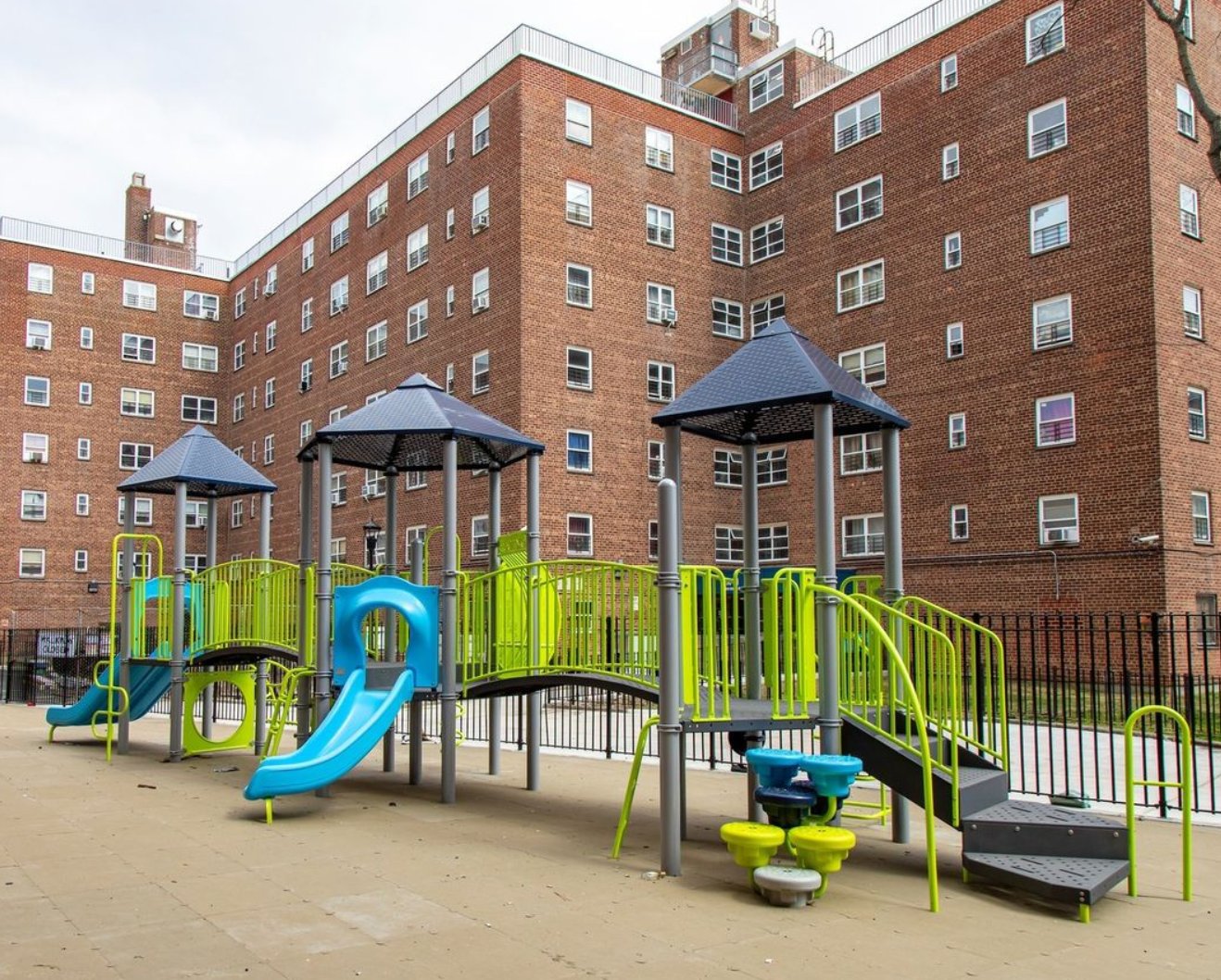
Photo Courtesy NYCHA
Hood Code, an after-school and summer coding program for kids aged 8 to 18 living in NYCHA public housing, emerged from Jason Gibson’s experience growing up in Queensbridge Houses, a NYCHA development in Queens.
In 2013, he was sentenced to five years in prison for a narcotics-related charge. For the first time in his life, it gave him time to read and learn.
“… I realized how much of a disadvantage I was at and how kids from my neighborhood are in,” he explained to NBC News. “I think my life could have possibly been different. I’ve always been an entrepreneur; I’ve always had that spirit. I could have been maybe one of the big tech founders.”
Plenty of other people living in public housing have gone on to make their names known worldwide. NYCHA, for example, was once home to actress Whoopi Goldberg; Aprille Ericsson, an aerospace engineer and recently appointed assistant secretary of defense for science and technology; Howard Schultz, former CEO of Starbucks; and Lloyd Blankfein, former chairman and CEO of Goldman Sachs.
However, Gibson was particularly inspired by technology’s power to change people’s lives. “Mark Zuckerberg and Bill Gates and these folks, you know, they had exposure to technology at a really young age,” he told CBS News. “Then that just had me thinking about younger generations that are coming from my same neighborhood.”
Yet, he was also particularly aware of the gap in terms of knowledge about and access to careers in coding and STEM facing people of color, leaving them at a disadvantage for breaking the cycle of poverty.
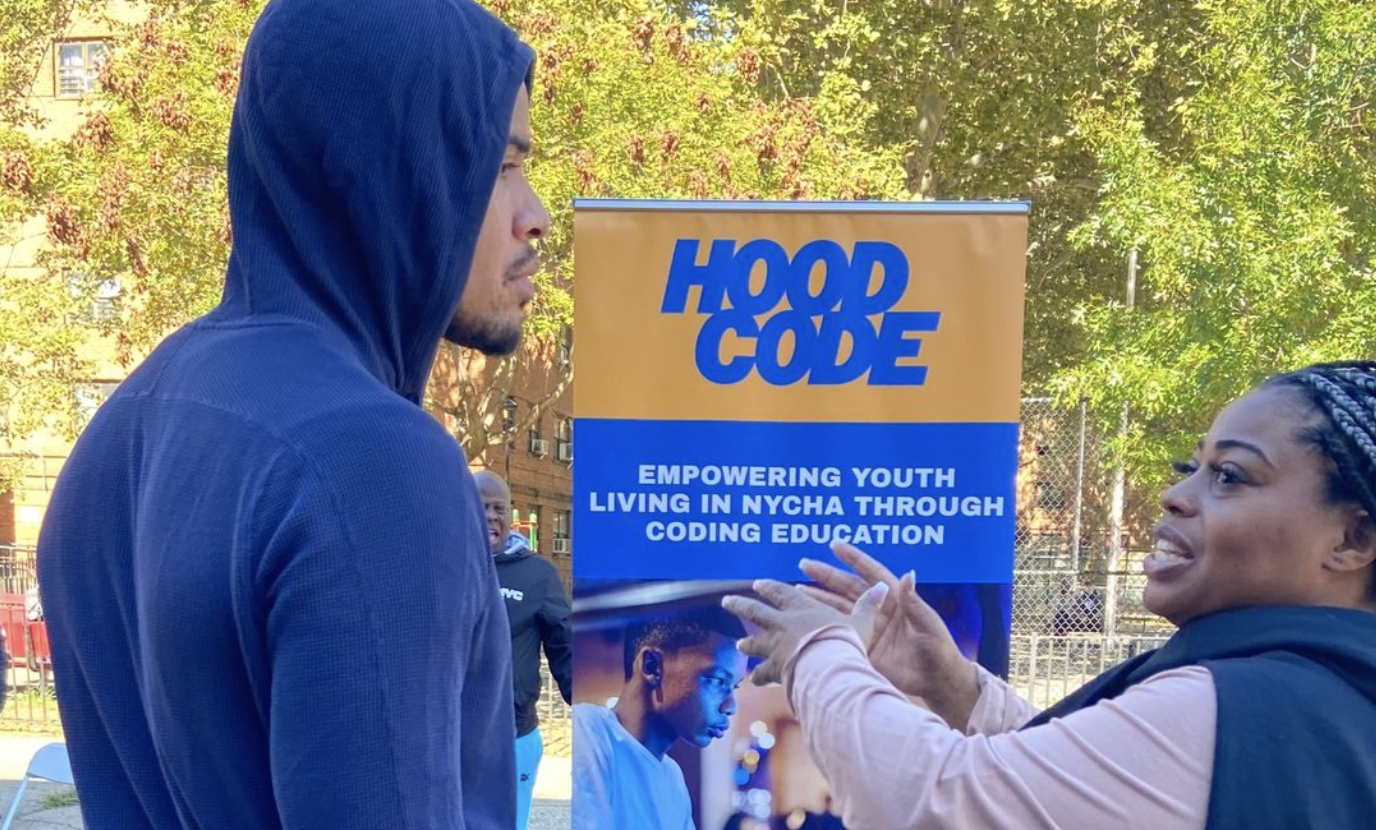
Photo Courtesy Hood Code
Gibson started working at a pro bono law office to help ensure that others who had been released from prison did not get sent back. In 2019, he also founded Hood Code.
Hood Code is not only free of cost but also links youths up with laptops and internet access to support their learning. Initially launched in the Washington Houses development in East Harlem, the goal is to establish programs in each of the more than 300 NYCHA developments.
“The tech industry is blowing up,” Gibson explained his mission to Afrotech. “So, it was about introducing them to coding at an early age so that by the time they were young adults and adults, this was already demystified for them, and they wouldn’t really feel intimidated to go into these spaces, which are a lot of times not dominated by people like us … .”
At the same time, it would provide them with “the skills at an early age to get good jobs and change their family’s financial legacies and socioeconomic conditions,” he continued.
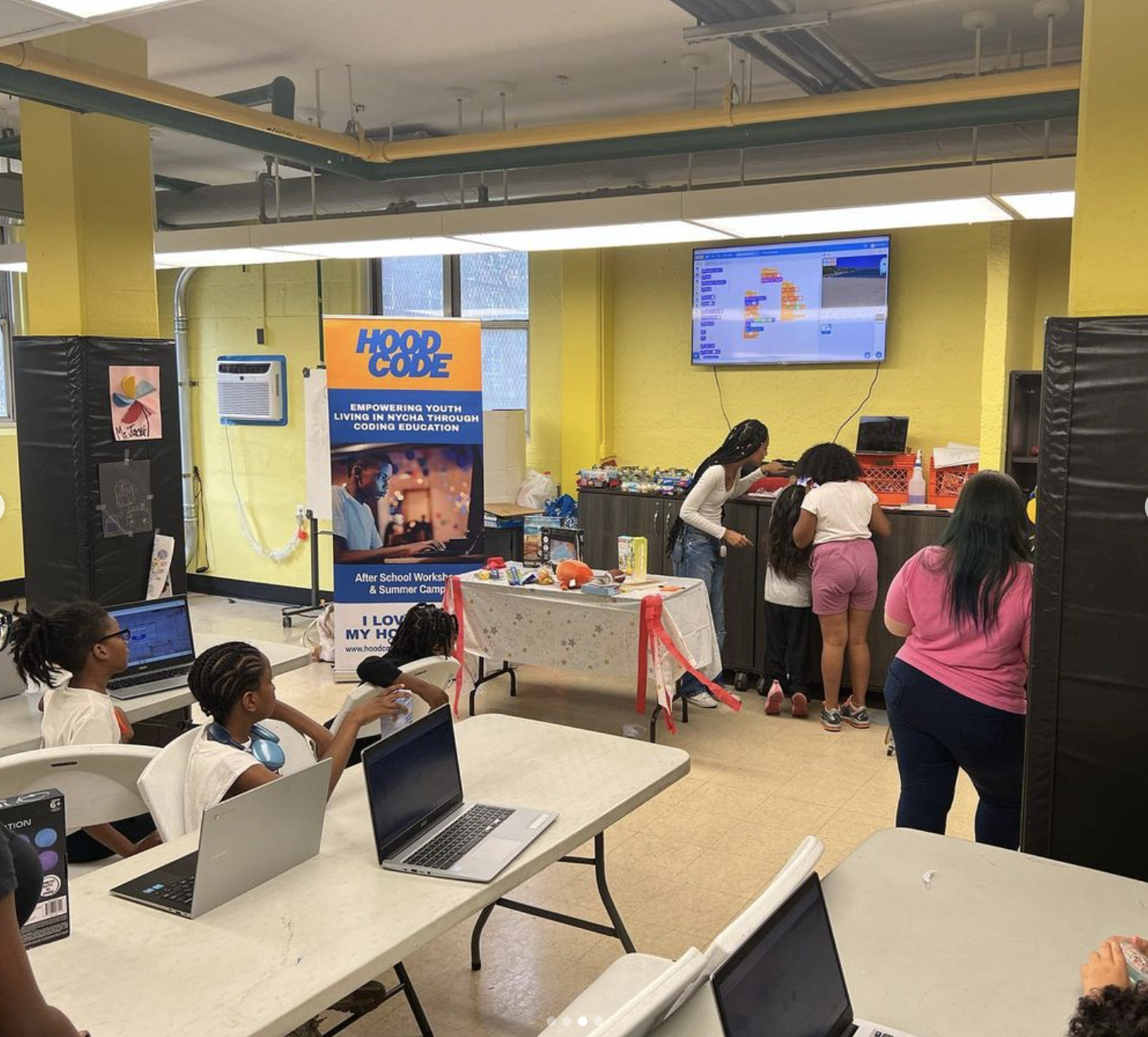
Photo Courtesy Hood Code
Hood Code offers a range of programs, from one-time introductory workshops to 13-week in-person classes in community centers – where the cohorts also get to visit local technology companies on field trips. Plus, there is a month-long summer camp with fun features like team challenges and theme days from July to August. After starting with just 20 students in one NYCHA development in 2019, Hood Code grew to 10 NYCHA developments in 2022, and about 300 students had gone through the workshops as of this March.
The kids learn to use coding languages like block-based Scratch, which is self-labeled as the “largest free coding community for kids,” and WoofJS, a Scratch-inspired platform for making games.
They learn how programmers develop some of their favorite games, like Flappy Bird or Geometry Dash, before they embark on recreating them or building their own.
“All kids love games, so we talk about the games that they play,” Gibson broke it down for CBS News. “We try to help them envision themselves actually creating something that they play.”
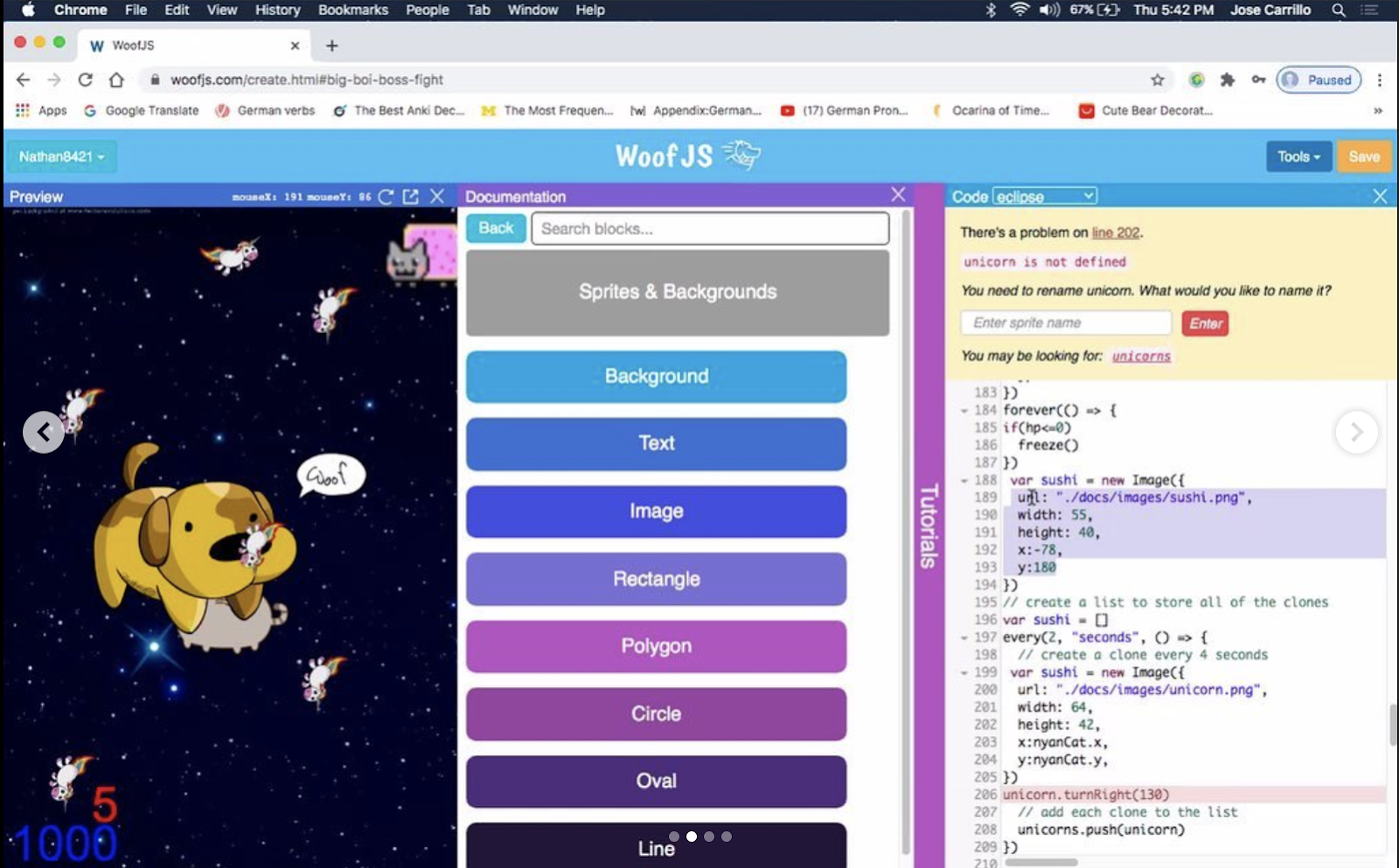
Photo Courtesy Hood Code
In addition to obtaining technical understanding and skills, the impact on the kids’ confidence is undeniable. In a testimonial, Jason H. said, “It helped me learn how to make characters and games and how to upload them, and sometimes I even teach myself, and now I feel more confident when I’m with computers.”
A parent, Shirley A., noted that her daughter “Didn’t use computers much, but now she’s more comfortable with using a computer because of Hood Code!” It also provides these girls and boys with professional growth opportunities: another student got an internship with Uber as a result of all they learned.
It’s equally rewarding for tutors from the same neighborhoods and, therefore, serve as role models for their students.
“I think it’s because we both come from low-income communities, we understand,” Sara Outar, a senior in high school, told NBC News why she and her friend took the job. “I didn’t have a computer until basically high school when I had to do online school. And I didn’t even know that jobs in coding existed.”
Christopher Glaspy, a tutor, told CBS News in 2022 that “it feels great to help the middle schoolers to code, teach them how to do something on computers.”
In 2022, Hood Code won the David Prize of $200,000. Each year, the prize goes to five “New Yorkers with ideas that will make a better, brighter New York City.” The funding was funneled back into the programming in the form of more laptops and more tutors in more developments.
Ultimately, the David Prize was “instrumental in me being able to really take Hood Code to the next level,” Gibson said to Afrotech. Of course, the organization also welcomes other financial contributions. It costs $50 to fund a program expansion, $100 to pay for a coding instructor for one week, and $500 to buy three Chromebook laptops.
“There’s too much opportunity out there in tech for kids to have to turn to the streets to take care of themselves,” Gibson told Essence. “There’s going to be generations of children coming out of Queensbridge and some of the other public housing complexes in New York City that are not going to have this exposure.”
“The schools aren’t offering it. The community centers aren’t offering it,” he continued. By offering it himself, he is tackling a systemic problem and creating real opportunities for kids growing up in the same area as he did.
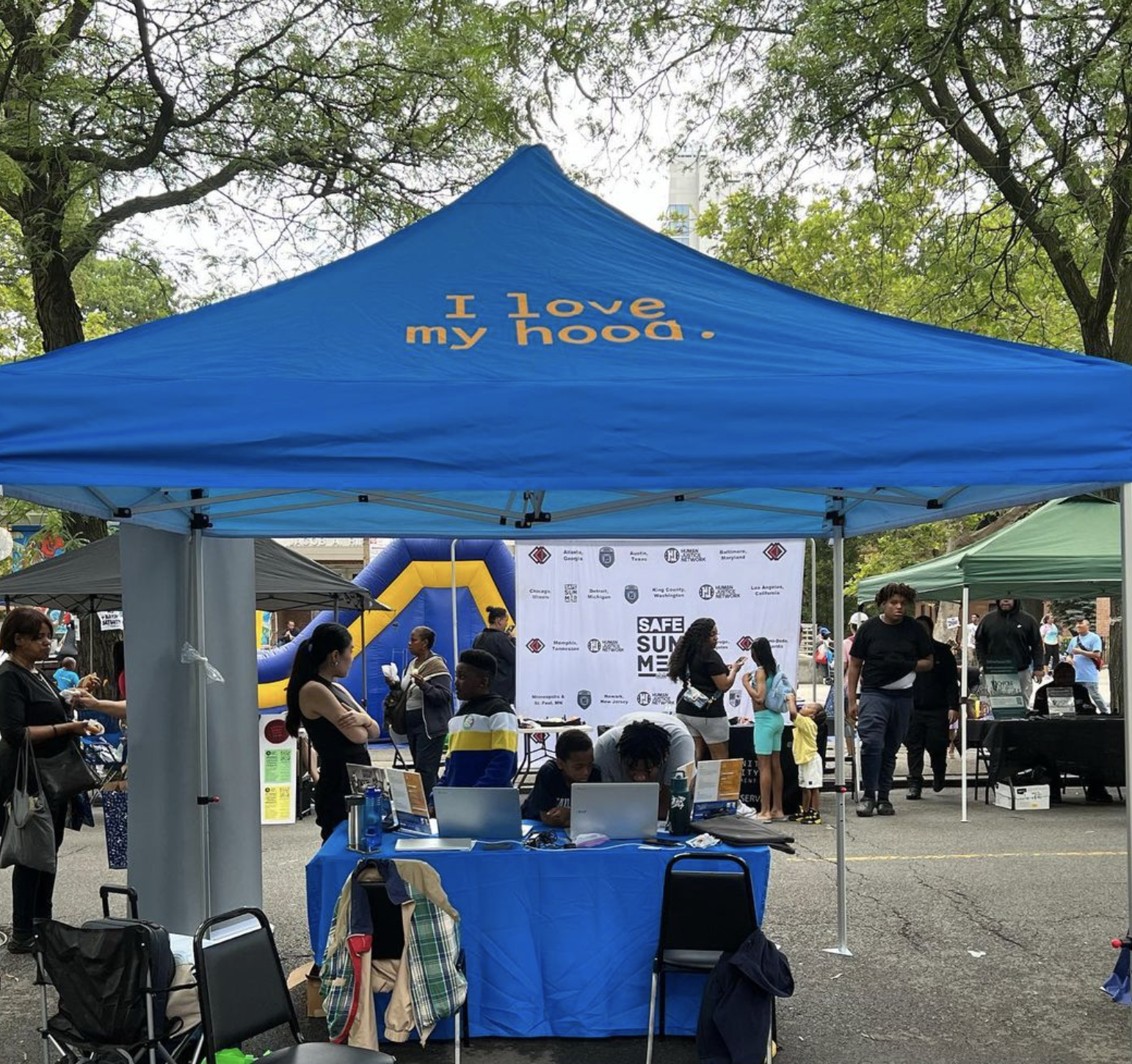
Photo Courtesy Hood Code