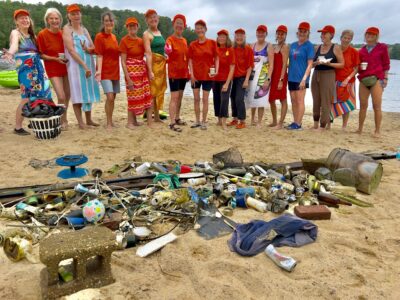
Environmentalists have bemoaned the amount of ocean plastic and waste littering the seas and beaches. Because of accumulated dumping, literal islands have formed, showing that overproduction has consequences.
Ocean trash has become a parody of several forms of media. Comics and television shows have depicted episodes of people living on these garbage islands. A recent video game launch offers a new perspective: what happens with all the trash at the bottom of the ocean?
Another Crab’s Treasure is an action-adventure game created by indie game publisher Aggro Crab. The game is set in a fictional city made from scrap that has sunk to the bottom of the sea.
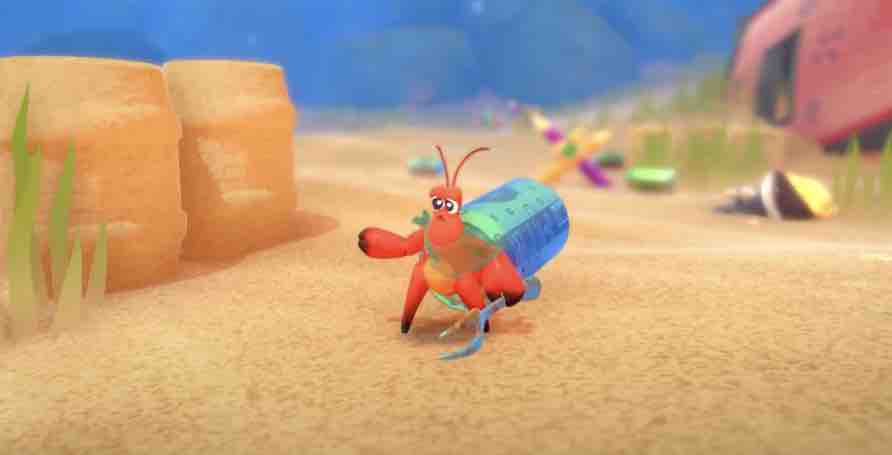
The player controls Kril, a hermit crab stripped of its shell by a “loan shark” for failing to make payments on it. The main antagonist offers Kril a choice: if the young hermit crab can find a legendary treasure, he can have his shell back.
The game takes you through several marine environments while showing how pollution has affected them. All characters are based on undersea life. There are an absurd amount of ocean-related puns in the dialogue.
The game is heavily influenced by From Software’s Souls series, noted for its incredible gameplay and storytelling but also its extreme difficulty. Unlike Another Crab’s Treasure, there is no difficulty setting in Souls games. Aggro Crab’s second-ever game allows players to run an easy mode where Kril can defeat enemies with a single swipe.

Photo Courtesy Bandai Namco Entertainment
One key aspect of the game is armor. Kril is unprotected without his shell thus he must make do with what he can find. Players can pick up objects like soda cans, other shells, and tennis balls. Each offers different layers of protection and special abilities. It’s also designed to send a message to a player: there is a legitimate possibility that real hermit crabs are using these items for shells in the real world.
Climate change is a prominent theme — mostly pollution. The underwater citizens have used the sunk trash to build cities and develop an economy.
The currency of the game is called microplastics. The days that the garbage floats down are considered holidays.
The marine life has been conditioned to think that trash is good; it’s a sign of progress. Weapons are forks and liquor bottles. Fishing hooks are consumable items. Every boss fight ends with “Pollution Scoured,” a play on text graphics that appear after you defeat bosses in Souls games.
There are multiple satirical jabs at capitalism throughout the plot. One of the main villains is a lobster baron, a not-so-subtle comparison to the robber barons of Industrial America. They were notorious for corruption and exploitation. The baron has a crab hunter — an evil squid representing the dark side of corporate greed.
The final villain is a cultish crab harnessing the power of a sea god who wants to send all the garbage below the water line, and it’s up to Kril to stop it. The game does drift into hyperbole, but the overall message remains the same.

Photo Courtesy Gamespot
Reception has been incredibly positive. Critics have praised the developers for tackling environmental issues with humor and audaciousness, presenting a problem we still have no true solution to. Josh Cotts of Game Rant praised the developers for its “unashamed approach to comedy,” not only because of the ironic glorification of ocean waste but because Souls games and their imitations are known for dark themes and foreboding settings. Another Crab’s Treasure is the opposite; it does not attempt to hide it but discusses climate change in a more lighthearted, bright setting.
“While initially framed as a tale about Kril breaking out of his routine and finding renewed purpose, it eventually tackles the ocean’s ongoing pollution problems, taking the narrative to a place that is bleak yet also genuine,” James Carr at Gamespot wrote. “Where Kril finds himself by the end isn’t one of those overdone happy endings, but instead a far more complicated place that feels true to some of the game’s more dour themes.”
Aggro Crab is not a mainstream video game studio, yet it has gained notoriety for satirical storytelling. The company’s first release, Going Under, is a take on startup culture and how low-level employees are treated.
That game is highly praised for its colorful art style, adaptive gameplay, and deeper messages.
Another Crab’s Treasure offers a lesson about our wasteful habits and how we’re not the only ones on this planet. People are still dumping trash into the ocean and other waterways. Recycling and upcycling help, but they can only do so much. The game will likely ruffle a few feathers, but environmentalists will surely praise the studio for this. It’s a comedic game that may raise awareness better than scientific reports due to its digestible nature.