Urban forests are one of the best ways to fight rising temperatures in cities, but they offer many other benefits. Some areas have urban orchards to tackle food insecurity, sequester carbon emissions, and clean the air.
In Toronto, a city ordinance has arranged to utilize more private land for tree planting. According to the 2018 CanopyTO report, private land makes up 55% of Toronto’s urban forests. Districts and municipal authorities plant and care for the trees, but it is widely believed commercial land needs to be utilized to reach cooling and emission reduction goals.
The report says tree cover has increased to 31%, resulting in $8.3 million in energy savings, $4.0 million in gross carbon sequestration, $37.9 million in pollution removal, $4.8 million in avoided runoff, and $55.0 million in total annual benefits.
Small trees are making up the majority of acreage these days. According to the report, 27,000 trees have been planted on private property thanks to various tree-planting initiatives since 2018. Toronto is also seeing fewer invasive species thanks to planting Canada-native trees.
There’s a more concerted effort to increase American cities’ urban forestry, especially as more data about how pollution disproportionately affects underserved communities emerges.
Michael Mendez, University of California, Irvine professor, told PBS NewsHour that these communities are at the most risk for heatstroke and dehydration in summer. Many low-income residents can’t afford A/C, and crumbling infrastructure means central air is out of the question.

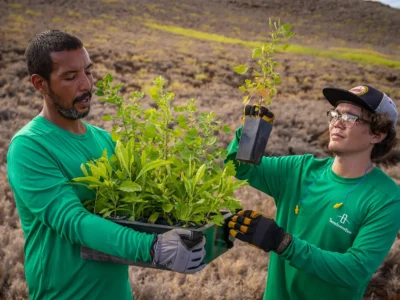
Photo Courtesy Manel & Sean
“I think many of us that are millennials, Gen Z or even older remember being on the hot turf, asphalt, in schools and see the steam actually permeate out of these hard heat-trapping surfaces,” Mendez said. “So imagine not just a schoolyard, which is just, unfortunately, an urban heat island, but an entire neighborhood, and how that can really change how you experience an extreme heat event, and let alone if you’re living in an older home that’s 100 years old.”
He explained that green space, watershed management practices, rooftop gardens, and other urban agriculture can help cool off cities, recharge groundwater, and provide more recreational space. He suggests that cities plant climate-resilient trees to help cool these places down. Heat waves are expected to get worse as climate change continues, so the need for urban forests only grows with every passing summer.
The United States Department of Agriculture (USDA) has published studies about urban nature. A 2018 report used examples from case studies around U.S. cities.
The agency concluded that urban forestry provides more shade and cover from UV rays. It also noted that carbon dioxide was not the only greenhouse gas to be sequestered.
Carbon monoxide, nitrogen dioxide, benzene, and ground-level ozone are all removed with photosynthesis. The results indicate increased levels of respiratory health in America’s cities. The heat island effect is lowered by 2 degrees Fahrenheit, with just 10% canopy cover.

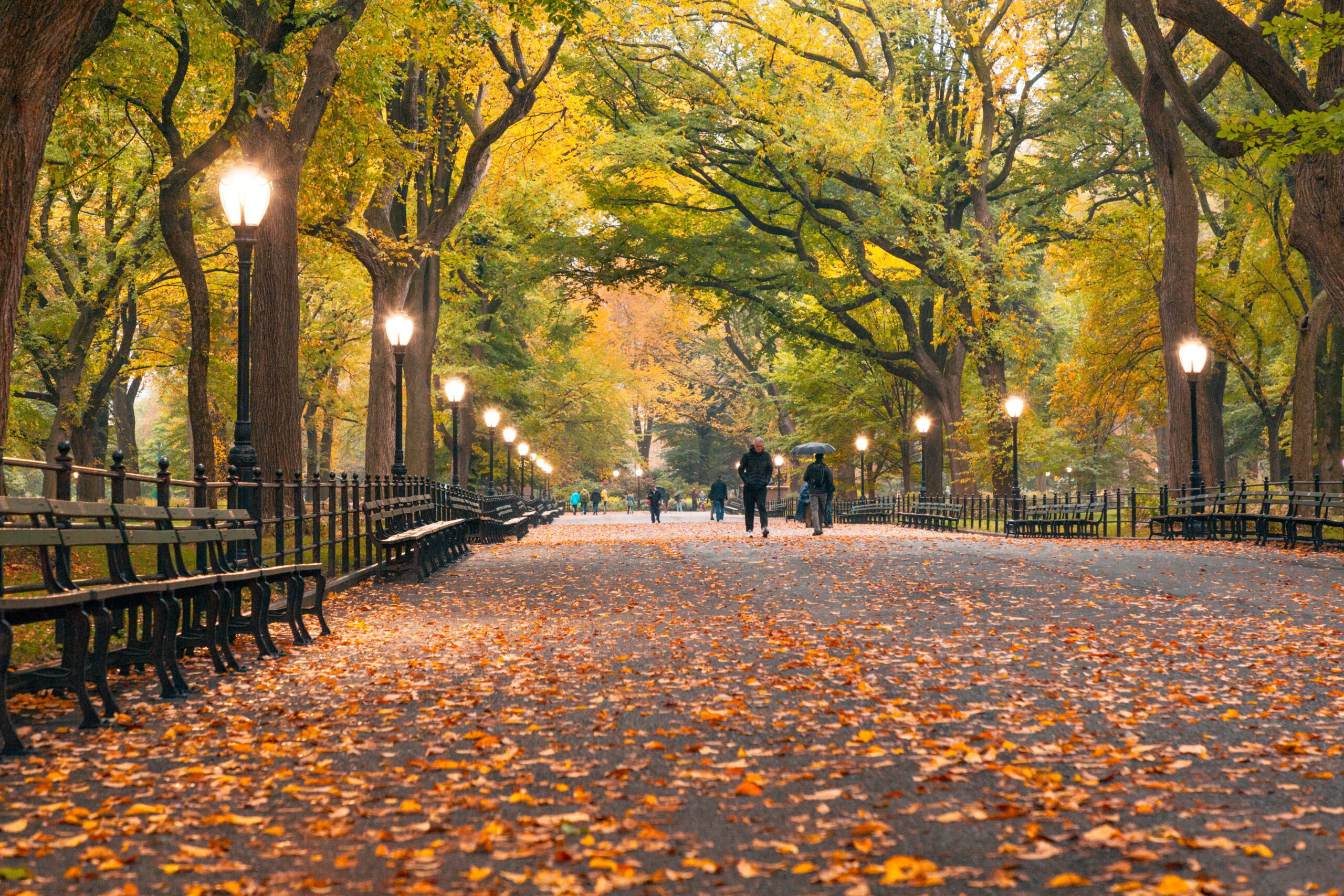
Photo Courtesy Chuttersnap
More shade also encourages more physical activity. People who took 90-minute walks through urban forests or heavy-vegetation areas felt the benefits of an improved mood.
USDA and the Forest Service are providing grants for more urban forests. The Inflation Reduction Act gave the U.S. Forest Service $1.5 billion for its Urban and Community Forestry program.
Proposals for the 2024 grant were due in February. The 2023 grants went to projects to increase the amount of trees in disadvantaged communities, including underserved areas in all 50 states, D.C., two U.S. territories, and three Affiliated Pacific Islands.
Researchers at North Carolina State University (NC State) published findings in two 2021 studies about how being outdoors improved mental well-being. The study published in the Environmental Research journal found that being inside caused more emotional stress for college students, concluding that more outdoor time improves mental health for teens and young adults. The study was conducted during the pandemic, but the message remains in post-pandemic life.
“This is an opportunity for anyone concerned about the health and well-being of future generations to focus on the power of parks when it comes to mental health promotion and to figure out what we can do to make sure all segments of the population have access to enjoy the health-related benefits that parks can provide,” Lincoln Larson, an associate professor of parks, recreation and tourism management at NC State, said to NC State’s College of Natural Resources News.